
How to Get Court Records
Finding a Snohomish County court record starts with one question: which court holds the file? The Snohomish County Clerk keeps Superior Court and juvenile files. District Court runs its own clerk's office. A municipal clerk holds that city's case files. Run the name through the Washington Courts index or Odyssey to get a cause number first. Then take that number to the right office. A hit in the state index is only a lead. It is not the record itself.
Superior files can be viewed online, read at the Clerk counter, or ordered by mail. The Clerk will answer file questions by phone or email too. District Court accepts requests several ways. Email, mail, fax, and a visit to a division all work. City cases belong elsewhere. They stay with the municipal court that handled them. Agency records sit outside this system and follow a separate disclosure route.
For Superior Court, the official records access page lays out every option. The county offers online lookup, counter service, mail orders, copies, and audio.
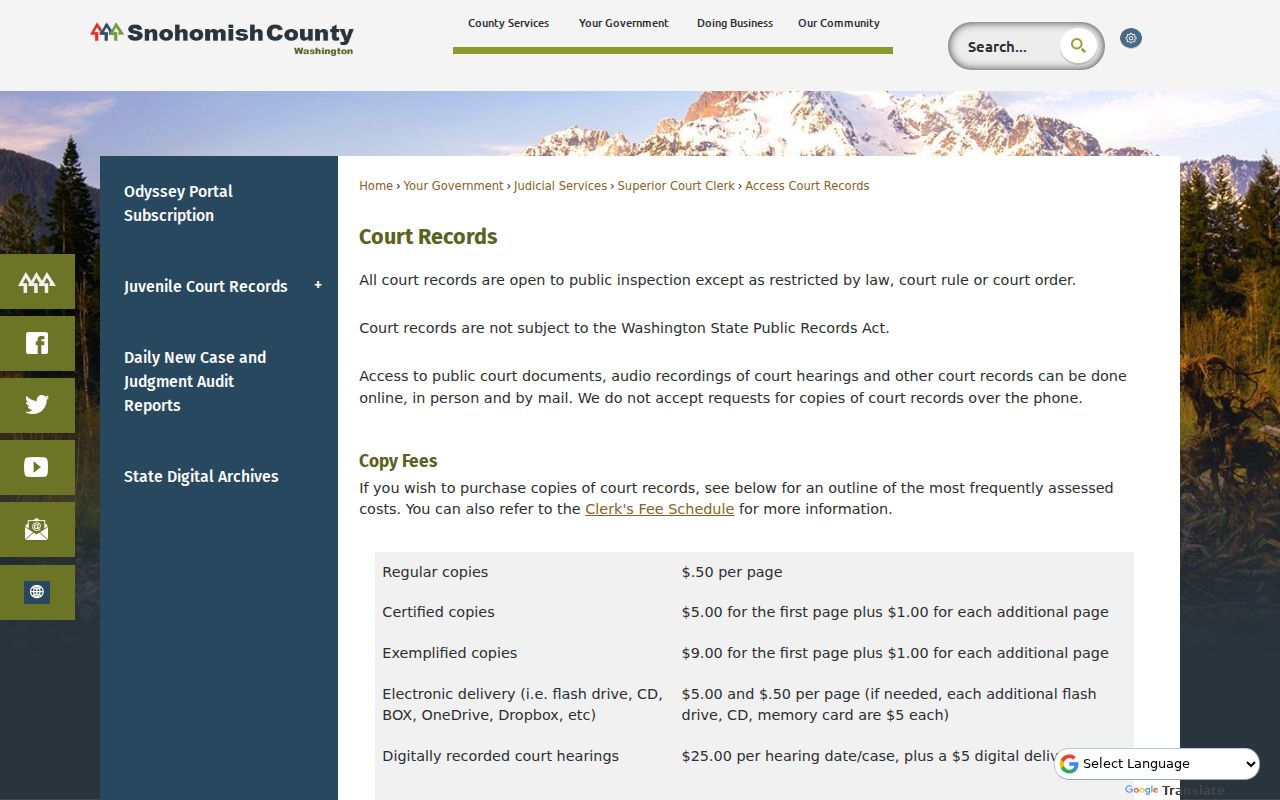
One portal is only part of access. Inspection at the counter, mailed requests, and clerk assistance remain separate ways to reach a court file.
- Identify Superior, District, juvenile, municipal, or federal court.
- Find the cause number and exact document or hearing date.
- Choose online viewing, counter inspection, mail, email, fax, or phone help as allowed.
- State whether a plain, certified, exemplified, electronic, or audio record is needed.
- Confirm cost and delivery before sending payment.
Want a focused lookup first? The Snohomish County case search compares the state and county tools.
Snohomish Court Request Details
A strong Snohomish County court records request names the court, the cause number, all parties, an approximate filing date, and the exact item sought. The Superior copy form lets you list up to five named documents and asks for a subnumber or filing date when you know it. It also separates pickup from return mail and plain copies from certified ones. For audio, supply the hearing date and the case. Check the docket or minutes first. The hearing may have used a court reporter, an electronic recording, or no recording at all. An audio file is not a transcript. A GR 35 request may require an approved transcriptionist.
Best request: Give the cause number, document title, filing date, copy type, delivery choice, and current contact details.
Put private locator data only on a secure official form when the clerk asks for it. A form may use a date of birth to tell records apart. That does not make the identifier fit for public display.
Types of Court Records
Snohomish County court records split by case level and format. Superior files can hold civil complaints, domestic petitions, probate papers, criminal pleadings, motions, signed orders, judgments, and hearing records. District files cover limited civil, small claims, infractions, misdemeanors, and criminal traffic within District jurisdiction.
- Docket or register entries showing the case chronology
- Complaints, petitions, answers, motions, and notices
- Signed orders, judgments, sentences, and decrees
- Public exhibits and declarations retained in the file
- Available hearing audio or reporter information
Juvenile material moves through a restricted route. Federal pleadings belong to the federal clerk and PACER. A city citation, plea, or judgment must come from that municipal court.
Snohomish Digital Archives Limits
The Snohomish State Digital Archives instructions cover selected public Superior Court series. You can search by case number. Record series, keyword, and date range also work. The county suggests "Show All Records" plus the magnifying-glass mark. Is an image you expect missing? Use the Clerk instead. Technical access changes. The archive is a selected channel, not a complete official file.
What a Court Record Contains
A full file is broader than its docket. The register lists events by date, while the documents hold the actual text of claims, responses, rulings, and relief. "Motion filed" does not reveal its terms. "Order entered" does not supply a signed copy.
| Cause number | Superior numbers may resemble 15-1-80304-31, with Snohomish code 31 in Odyssey. |
|---|---|
| Parties and roles | Plaintiff, defendant, petitioner, respondent, or another formal role. |
| Register | Chronological filings, settings, notices, rulings, and disposition entries. |
| Pleadings | Public complaints, petitions, answers, motions, and declarations. |
| Orders and judgments | Signed instruments needed to verify the ruling. |
| Hearing material | Minutes, recording status, audio, or reporter information. |
A filing date marks the day the clerk recorded an item, which can differ from the day it was signed or served. Read each entry in order.
Pre-1978 Snohomish Court Files
Most pre-1978 Superior Court files require a research request rather than a modern portal query. The form asks for the basics. Give the approximate year, case type, requested papers, both sides' names, and any facts that narrow the work. The county gives a ten-business-day estimate. The charge is $30 per hour with a one-hour minimum, paid by cashier's check or money order. You can send a self-addressed stamped envelope or pay $3 for postage and handling. That fee stands apart from a routine copy price.
Is an old case missing online? Check older number formats and the Digital Archives. Then use the Clerk form. Snohomish JIS began in 1978, SCOMIS in 1994, and Odyssey in 2016. No single portal spans every era the same way.
Certified Copies and Fees
A plain copy reproduces a public paper. A certified copy carries the clerk's authentication, and an exemplified copy adds a higher form of court authentication. Electronic delivery and audio carry separate charges, so check the Superior Court access page before payment.
| Superior Clerk item | Published amount |
|---|---|
| Regular paper copy | $0.50 per page |
| Certified copy | $5 first page, then $1 each page |
| Exemplified copy | $9 first page, then $1 each page |
| Electronic delivery | $5 plus $0.50 per page |
| Digital recorded hearing | $25 per hearing date and case, plus $5 delivery |
| Historical research | $30 per hour, one-hour minimum |
District charges $0.50 per page, $5 for the first certified page plus $1 for each added page, and $20 per case and hearing date for audio. Municipal fees differ.
Snohomish County Clerk
3000 Rockefeller Avenue, M/S 605
Everett, WA 98201
425-388-3466
Weekdays 8:30 a.m. to 4:30 p.m.; closed noon to 12:45 p.m.
Snohomish District Record Channels
The District Court records page separates court case records under GR 31 from administrative records under GR 31.1. A requester can mark criminal, civil, or administrative and identify a docket, complaint, judgment, or sentence.
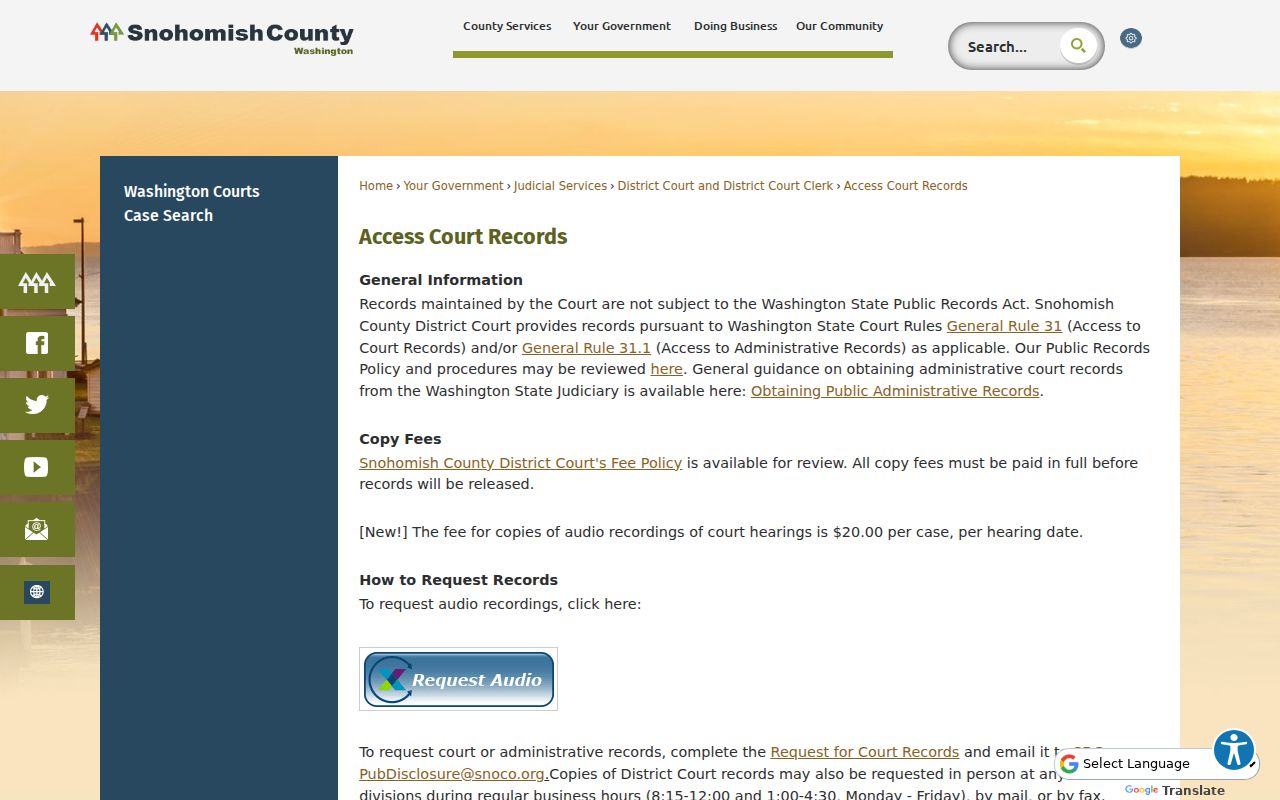
District Court keeps its own case records in Snohomish County. You can request copies by email. The address is SDC-PubDisclosure@snoco.org. Mail, fax, and visits to a division work too. The County Clerk has no power to certify District or municipal files.
The official District Court fee schedule lists the charges. It covers copies and related services for that court.
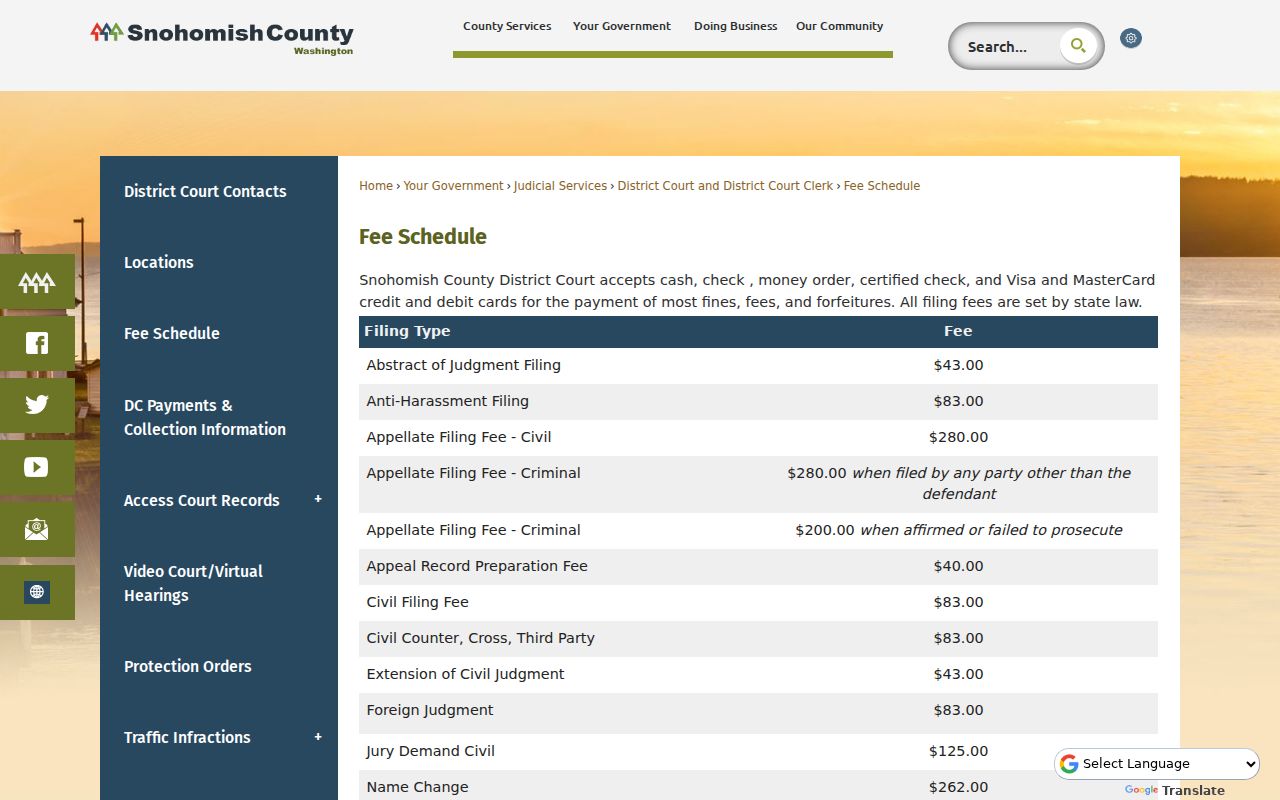
This route applies only to District Court records. Superior Court and municipal courts follow their own procedures.
Snohomish Audio and Transcript Choices
Sound and text are two different things. A Snohomish County court record may exist as recorded audio, a typed transcript, or nothing at all. Check the minutes first to see whether the hearing had a reporter or an electronic system. Then request by date, cause number, and format.
- Audio
- A copy of an available digital recording, subject to access limits.
- Transcript
- A written record prepared through the proper reporter or approved route.
- Minutes
- The court's concise account of a session and recording status.
- Sealed audio
- A recording unavailable through ordinary public access.
Juvenile audio runs through the juvenile clerk under juvenile law. A clerk cannot lift a restriction without legal authority.
Public Access and Sealed Records
Washington General Rule 31 opens court case records to the public. Law, court orders, privacy, and safety still set limits. That promise has edges. A name search may show the case index yet hide protected documents, and a public listing can sit beside sealed attachments.
GR 15 controls sealing and redaction, while GR 22 shields sensitive material in family, guardianship, and protection-order cases. Juvenile records carry extra limits of their own. So a missing result in a docket search does not mean the case was dismissed.
Key rules:
Washington General Rule 31 sets the court case-record access baseline.
Washington General Rule 15 governs sealing and redaction.
Washington General Rule 22 limits access to sensitive family and related records.
The Public Records Act route under RCW 42.56.070 covers agency and administrative records. Pleadings, judgments, dockets, and recordings from Snohomish cases go through the clerk's court-record process instead.
Which Snohomish Clerk Certifies?
Certified copies come from whichever clerk holds the file. The County Clerk authenticates Superior Court records, and District Court certifies its own limited-jurisdiction cases. A municipal court handles its city's records, while federal records stay with the federal clerk.
| Record sought | Correct custodian |
|---|---|
| Superior pleading, order, or judgment | Snohomish County Clerk |
| District docket, judgment, or audio | Snohomish County District Court Clerk |
| City citation, plea, or judgment | Named municipal court clerk |
| Juvenile record | Juvenile Court access channel |
| Federal docket or pleading | Federal clerk or PACER |
Knowing this split saves time and keeps a correct form from landing at the wrong office. Ask the clerk of record for the current total before you pay.